What to eat in Danang: Vietnamese influencer’s food tour spotlights dishes beyond pho
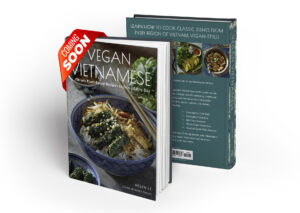
As a dedicated culinary chronicler, author and influencer, Le – whose full name is Le Ha Huyen – has been creating Vietnamese recipe videos since 2011. Beyond that, she offers cooking masterclasses and occasionally hosts tours, guiding hungry visitors to her favourite eateries in her hometown.
We joined one such tour, and the first stop was at one of Le’s favourite mi quang spots, Mi Quang Nhung (135 Nguyen Tat Thanh, Hai Chau), an unassuming street stand in the city’s Hai Chau neighbourhood.
A Da Nang staple, mi quang can be eaten at any time of the day, but Mi Quang Nhung is only open in the morning. Naturally, mi quang is the only dish it serves. The noodles are hand-cut into thick strands, and customers can choose from a selection of toppings – stewed chicken, beef, pork rib, fish, or frog legs. We arrived late to find the frog legs sold out, so we settled for snakehead fish fillets, which were firm and flaky.
“The broth for mi quang is thicker, so it gets absorbed when you mix it,” Le says. “We are very flexible with the recipe. It is not fixed to one method. People do improvise.”
Although substitutions and adaptations to the dish are welcome, Le says stirring in a big handful of fresh herbs and crunchy lettuce is essential.
“My mum uses tomato for her broth with shrimp,” she says. “The rest of it, like the protein, you can change to whatever. But you need the fresh greens, crushed peanuts for a crunch, and the broth should not be boiling hot, so it does not destroy the fresh veggies.”
Le has also become adept at appraising mi quang joints based on their herb and vegetable selection.
“For example, [Mi Quang] Nhung’s plate of veggies includes a highly valued component: shredded banana blossom. It does not have much taste, but it adds great texture,” she says.
To Le’s palate, central Vietnamese is the most varied and flavourful of all Vietnam’s cuisines, partly because much of the country’s agriculture is focused in the central highlands.
“In the south, it is sweeter and coconut-based, [while] the difference between Da Nang and Hue [also in central Vietnam] is that Hue [cuisine] is spicier.”
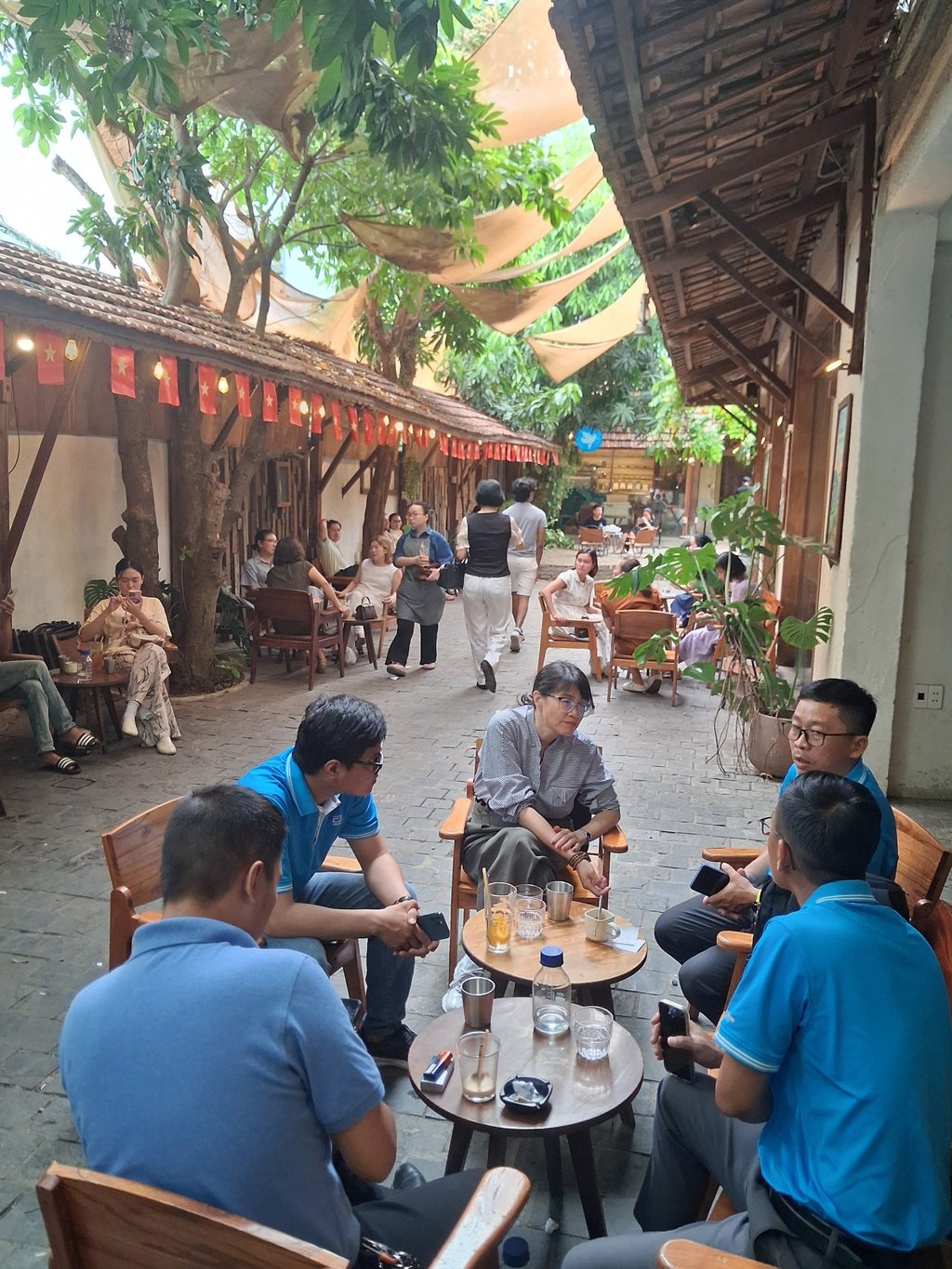
The brand was started by a husband from Da Nang and a wife from Dak Lak, a province in Vietnam’s central highlands. The couple also have a farm that grows robusta beans. According to Le, the Vietnamese prefer robusta over arabica for its stronger, rounder flavour.
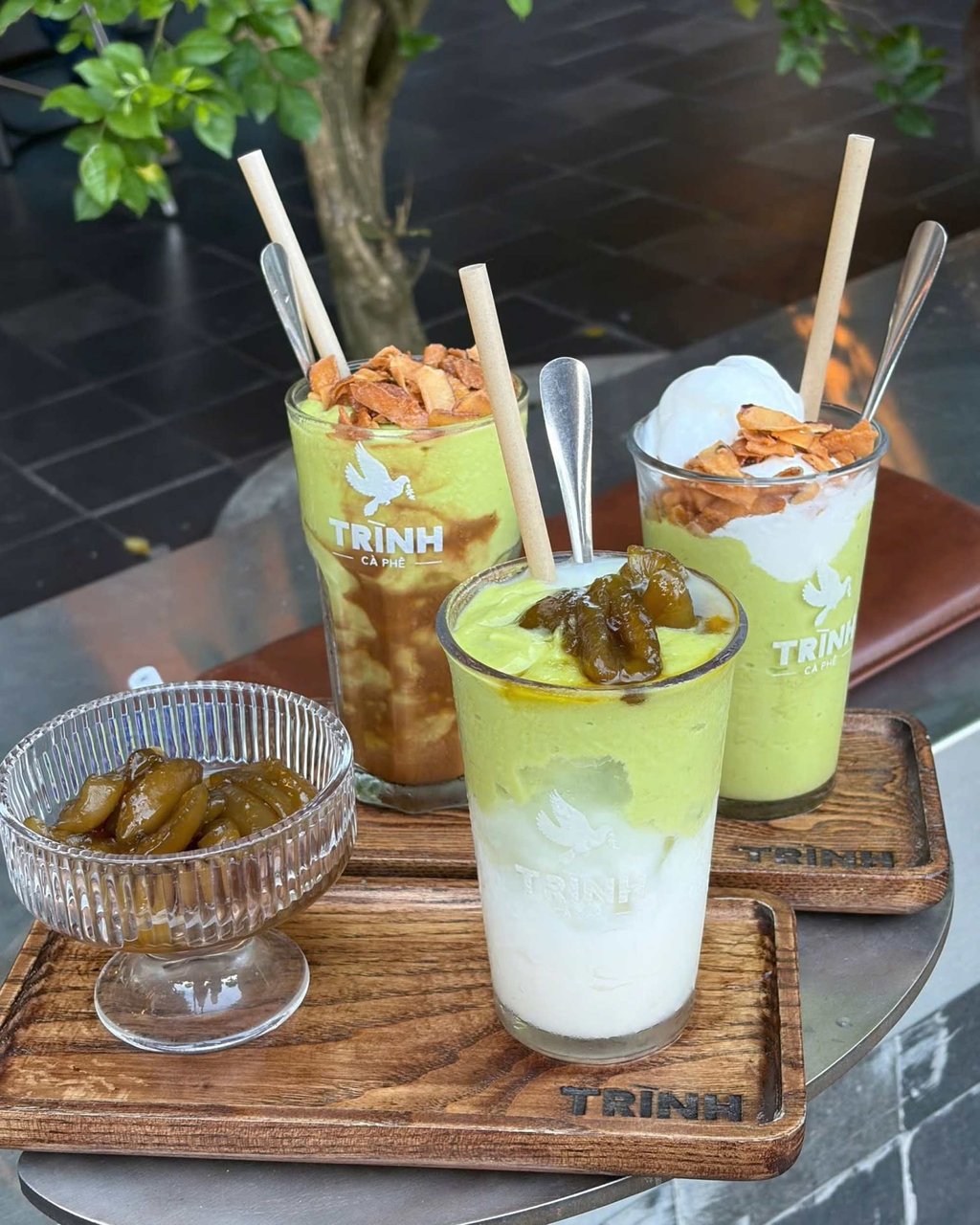
The farm also produces avocados, which the couple use in their viral ice avocado coffee. It arrives with swirls of the ripe fruit marbled with coffee, and is topped with crispy toasted caramelised coconut.
To be honest, the thick drink would benefit from a richer mouthfeel. Vietnamese avocados have smoother skin and a longer, elongated shape, but contain less fat and oil.
The shop’s other popular drink is coconut coffee, which is sweeter than its avocado coffee.
Over caffeinated drinks, Le – who studied in Singapore and Germany – shares how she became a food influencer.
“At that time, when you Googled, there were no local food results in English, so we introduced all these dishes. I then started a YouTube channel, and that got us a lot of attention. This led to us starting food tours. We ran it for quite some time, until Covid came. My sister then opened a restaurant, so she stopped, and I continued the tours. I love telling stories behind the food and sharing the culture.”
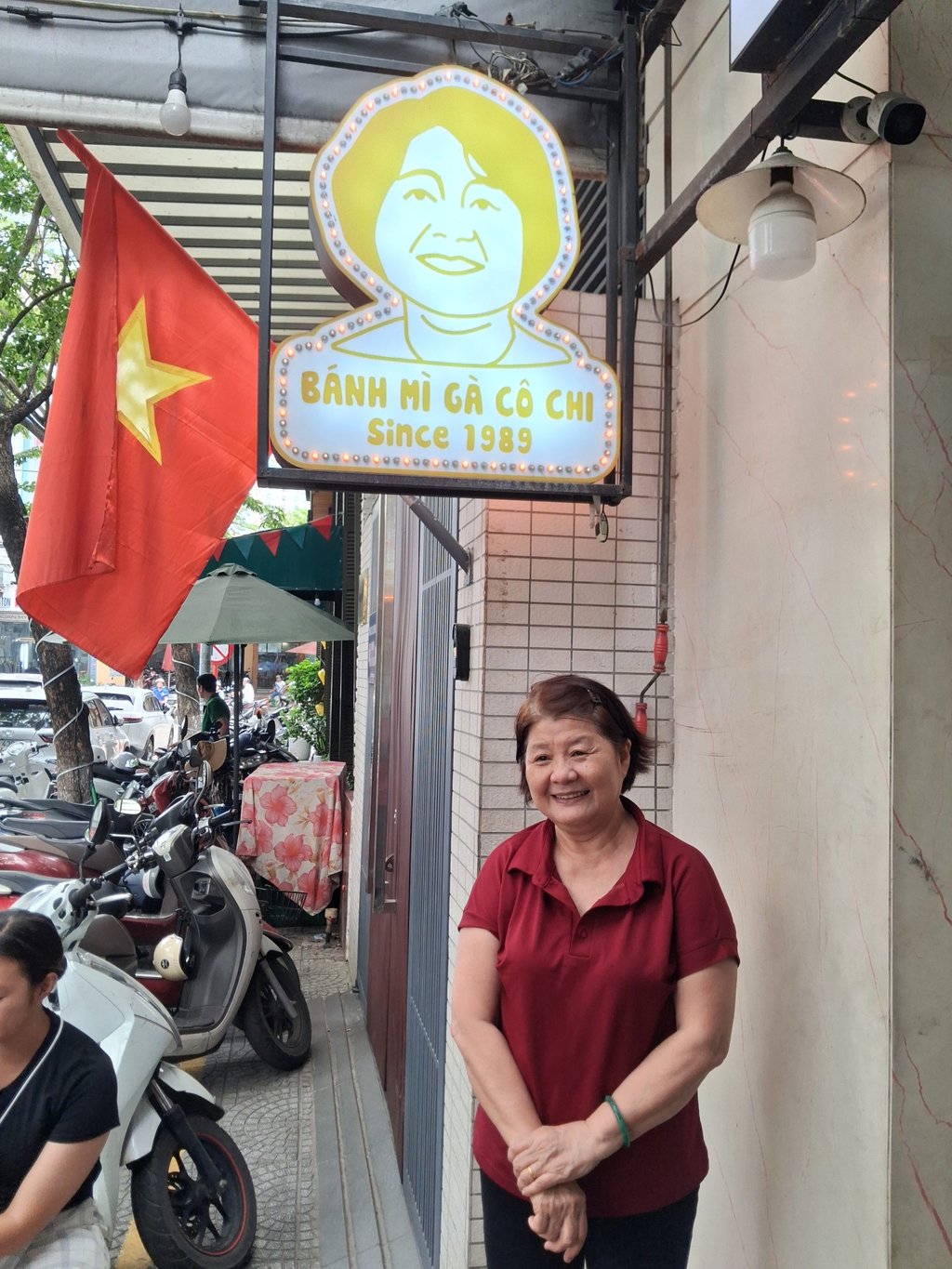
The shop fills its banh mi buns with pork floss, mayonnaise, cucumber and pickled papaya. It is an interesting variation of the sandwich, but we do miss the savoury hit of meats and pâté.
Our last stop is for banh xeo – Vietnamese crepes – at a shop at the end of a long alley. Banh Xeo Ba Duong (280/30 Hoang Dieu, Hai Chau) has been around for more than 30 years and is another no-frills, single-dish establishment.
It has become so famous among locals that other restaurants have opened on the alley to leech customers. But Le is adamant that we must go right to the end.
The chefs have stacked banh xeo up at the shop’s entrance to accommodate the constant stream of orders. When our dishes arrive, Le expertly lays an egg pancake cooked with sprouts and prawns on a sheet of rice paper. She then adds cucumber, pickled papaya and crunchy greens.
Next, she takes a meat skewer, wraps the banh xeo around it with one hand and pulls the meat clean off the skewer with the other. When the rest of us try, it is not nearly as elegant, but the imperfect rolls still taste fantastic dipped in peanut sauce.
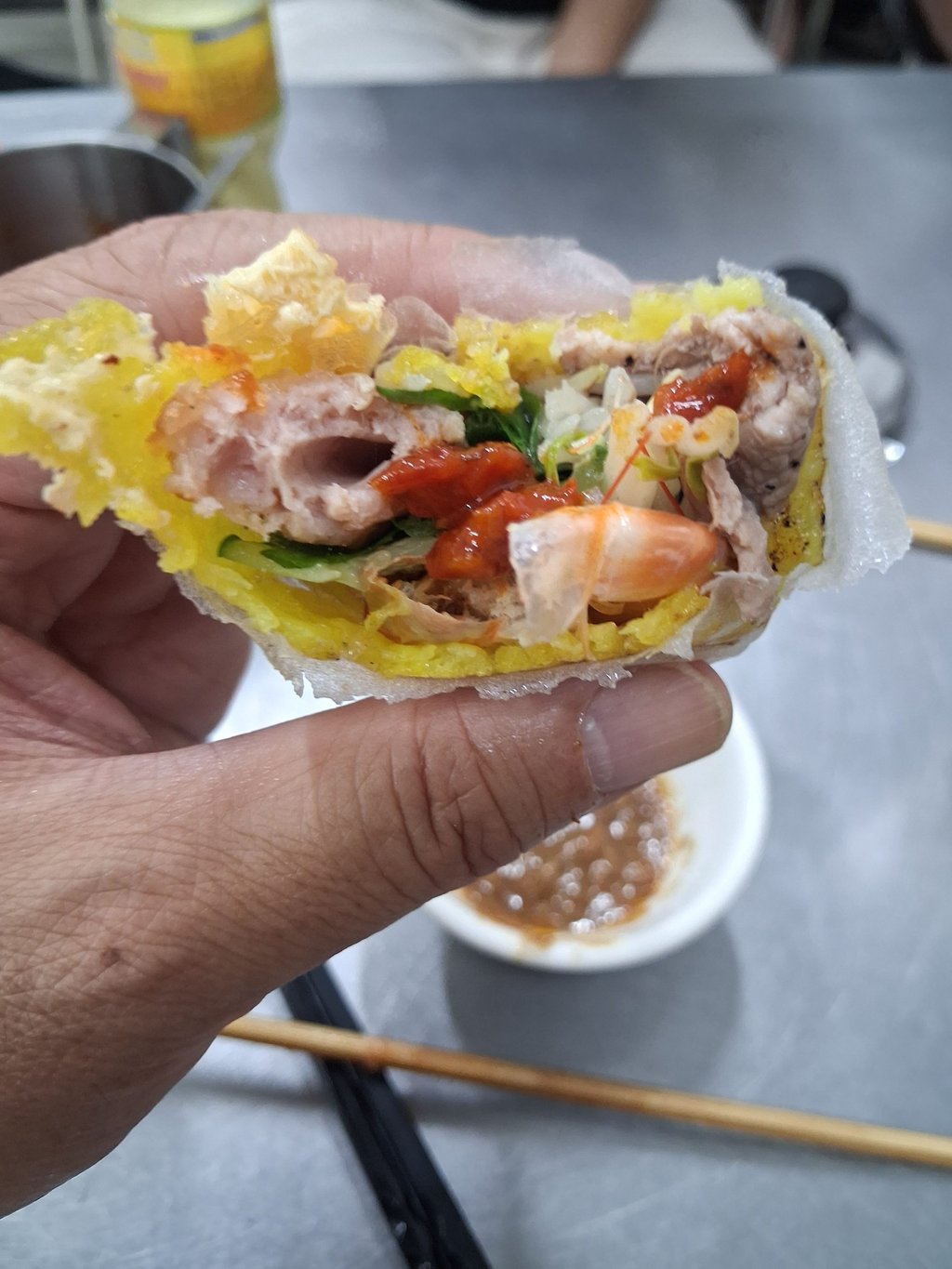
Le says Da Nang’s food culture is flourishing as the city’s economy expands. A rising tide lifts all boats goes the proverb, which is apropos for this coastal beach city.
“But many [from the] older generation, like my uncle and father, still stick to traditional foods. I ask them to try Thai or Korean, and they do not like it. But younger people are more open to international food.
“Also, more Vietnamese are moving here. So many Hanoi people come to Da Nang and buy a second property along the beach for holidays. So, a lot of good pho and northern restaurants have opened.
“The scene is a lot more diverse now. For many Vietnamese, Da Nang has become their favourite destination. Because of that, mi quang noodles are also getting more popular.”
Andrew Sun has dabbled in many shades of the media spectrum for 25 years, from college radio, TV, print and online columnist to starting film festivals, managing music labels and authoring food books. Someday he will figure what he wants to be when he grows up.




Leave a Reply
You must be logged in to post a comment.
About me